QByteArray not initializing
-
I thought I had a handle on QByteArrays, but there's obviously something I'm missing. Here's a clip from a debug session:

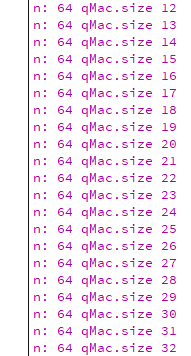
Note the value of qMac is "<not accessible>" and indeed if I try to access it (with an assignment, an append, a resize, etc). I get an error.
Am I defining it wrong? Odd how qKey and qTxt work just fine. Thanks...
-
Hi
Do you use the qMac variable ?
It could be compiler optimized it out.
you mean if you do
qMac.append(xxx)
you get error ?
What error? -
@mrjj yes I do. I try to use it in several ways, and I get an error (usually a segmentation fault).
I'm wondering whether I need to initialize it on construction or something...
@mzimmers
That sounds strange.
You do try to use it in same function ? ( int test() )and you did test with something that is 100% valid?
the char *mac could be be pointing to invalid stuff.so if this crashes
qmac.append("the test");Then there is something really odd going on.
-
@mzimmers
That sounds strange.
You do try to use it in same function ? ( int test() )and you did test with something that is 100% valid?
the char *mac could be be pointing to invalid stuff.so if this crashes
qmac.append("the test");Then there is something really odd going on.
@mrjj I'm appending a character at a time:
    uint8_t c;
    n = strlen(mac);
    for (uint32_t i = 0; i < n; i +=2)
    {
        p = mac + i;
        sscanf(p, "%2x", (int *) &c);
        qMac.append((char) c);
    }
I wonder if it's objecting to the content of my characters?
The behavior is unpredictable; sometimes I get this error instead of a segmentation fault:
This application has requested the Runtime to terminate it in an unusual way. Please contact the application's support team for more information. terminate called after throwing an instance of 'std::bad_alloc' what(): std::bad_alloc -
@mrjj I'm appending a character at a time:
    uint8_t c;
    n = strlen(mac);
    for (uint32_t i = 0; i < n; i +=2)
    {
        p = mac + i;
        sscanf(p, "%2x", (int *) &c);
        qMac.append((char) c);
    }
I wonder if it's objecting to the content of my characters?
The behavior is unpredictable; sometimes I get this error instead of a segmentation fault:
This application has requested the Runtime to terminate it in an unusual way. Please contact the application's support team for more information. terminate called after throwing an instance of 'std::bad_alloc' what(): std::bad_alloc@mzimmers said in QByteArray not initializing:
std::bad_alloc'
that is normally for an out of memory situation ?
the crash could be from sscanf.
also i think you can go out of bounds with this code
n = strlen(mac);
for (uint32_t i = 0; i < n; i +=2)if n is not even and you increase with 2 would that not count wrongly ?
-
@mzimmers said in QByteArray not initializing:
std::bad_alloc'
that is normally for an out of memory situation ?
the crash could be from sscanf.
also i think you can go out of bounds with this code
n = strlen(mac);
for (uint32_t i = 0; i < n; i +=2)if n is not even and you increase with 2 would that not count wrongly ?
@mrjj everything you say is true, but it's not crashing on the sscanf() call. And it's not getting far enough into the mac string to overrun. I'm doing the identical thing with 2 other QByteArrays before this one, and they work perfectly.
I even thought there might be something wrong with my variable name, so I refactored...same thing.
-
@mzimmers
Hmm. if you single step the loop, cant you see what is wrong when
it crashes ?you do the same thing with qText and qKey?
@mrjj here's the code in its entirety:
#include <QByteArray>
#include <QDebug>
#include <QCoreApplication>
#include <QMessageAuthenticationCode>
#include <QCryptographicHash>

int test(char *key, char *txt, char *mac);

int main(int argc, char *argv[])
{
    QCoreApplication a(argc, argv);

    char  Key8[] =          "60e431591ee0b67f0d8a26aacbf5b77f"  //  arbitrary key
                            "8e0bc6213728c5140546040f0ee37f54";
    char  Txt8[] =                                              //  Len = 1054 BYTES
                "e5098b6a0b1cfc57c6a76537104a39c48baecb15c6bbb46fbb0b745f9c9e5c05"
                "cfcfabb33786f7b7b5b0ce74eeec9eb84f87d2494fab3ec1f4d3bd9c99821890"
                "ee352a1d40964264fbf2c93c6ded2583cc75dcb27bf4fdb489cabcf97bfa5cc6"
                "4b2352cfb0b3a707a0579eb713b697cd0b5e3377d1feb9f181d7b89cc86dee4f"
                "ed8269f10e44ec48adc6940c6badbb40122c1dc2d9323920e4e1fbad0b4397d4"
                "dc38b8ade3b3dace2926f464fa3b5b82ebc5e3b81cf647e8bbd2cb55c9e31ffd"
                "212f8729b66739421c6106e64ac83d3b9e13cd8321b3a9f10d9171bb8cb74e71"
                "c34d1e8d0fc8d14b8e5e12bbe2bd2a1431fc224b70d228e4e2063509db26ecd9"
                "ca7cc402763e69928805600a4a80eab4ae6a2c3792b98c6942195e643f98c0dc"
                "3fa3c2b07431cbbe113e38fc0b7b45c51c4431700ed29d2736b236f63f759323"
                "29aa60be9009bd7832f1e1b9ac1503ec84727a1e6c8423c7c5b903e763262d55"
                "9078e654532e0868f206a468b5b5ebd3eddb4f673536e5f0f8160e5f3311561b"
                "7cf79c9c440974355965c931aec5c7225f69f776f052ac4bd6b19f85389fd61d"
                "f60ecabbeb00c8886ff7983d20ac5d81e303bc71253f40806772fd81f9387402"
                "05a5b7dcd07cce083da258b493d275967f91e4815d656936b342727cfe45f973"
                "b2a5ac257ce64c5eca4f53be8d9fd90c3dfcb8cd1e2cef15c307449ed02c2e17"
                "04f4f1be76a40b311ee7cf81987b5089252a807ef3fc99c79eabbc0ef657d897"
                "037bced04620d32a425015283bcea1b53e0484bb613d30f14c1422f5f82cc29a"
                "b7228b8375c06bf13d746dd9ff00953a90720badf2577d3ed62cbe7a5f15b3c9"
                "29d26ffe8aee9d2d17391ebc6a79f4bd235d5f7b2db2455343d9d7c6b27972cc"
                "6071c36a0d112f86d98972fb06a186e900abc64e9ab653db9b05b70079c0c84a"
                "64e8cfee8690eaa68a4bafbb5be112632e46894ec2cc6e7ce697a4513d517deb"
                "3e20dbb37ed5963232671e27ef9f62d6b514f0a22c5a5dde2d77e7e184965958"
                "f5002fe17d47fbd5d9c407644d443ce89eff427360cae9aa788dc8d7d9f62439"
                "916f139f094ee035884cb29dfa396941f0eec9e8e782da88cdc18e5bc1d9a535"
                "1b57ce15ac520ffa47e666f87fe5b18ab3c8cb2a48ecf81f36fb8397c6a7a5f5"
                "9a9fa96cedbb4ecd1c7a6d9d65afdb6bef7791600b6e0a18ba23edb06fc9ec21"
                "162feccc54f2665611f10db53401b18bade263b3b972da1a612115d144a54260"
                "97efdf5c6a5d1f3c2d318f687242f993f5f1884bd95f2ece34dd4320cea46f5a"
                "26c7c945b665402778233bdda9d97c2acd8c4a4ff39dcfdc3a3fbfc5942e3ab8"
                "ca9ff4aec17293c1fbaf583d603002f93f9befe8909485eb7c30d0e91fac6c22"
                "8c5fa6c011eddeafbdbe30af20ae53a85206c03d37ac17a30096bfb4f584cd3f"
                "72ef28a3303cea9cc636095c70bb36de0eb50577704d4faed05bd54da020";

    char  Mac8[] =                          //  HMAC_SHA256 7.3728=410ms 18.4320=
                "4a0ce2f8ffca9e77443e661c88ccdc04ba6ac9bb901642fadae7fe8e4c2d50f7";

    test(Key8, Txt8, Mac8);
    return a.exec();
}

int test(char *key, char *txt, char *mac)
{
    QByteArray qKey;
    QByteArray qTxt;
    QByteArray qMac;
    uint8_t c;
    char *p;
    uint32_t n;

    n = strlen(txt);
    for (uint32_t i = 0; i < n; i += 2)
    {
        p = txt + i;
        sscanf(p, "%2x", (int *) &c);
        qTxt.append((char) c);
    }

    n = strlen(key);
    for (uint32_t i = 0; i < n; i +=2)
    {
        p = key + i;
        sscanf(p, "%2x", (int *) &c);
        qKey.append((char) c);
    }

    n = strlen(mac);
    for (uint32_t i = 0; i < n; i +=2)
    {
        p = mac + i;
        sscanf(p, "%2x", (int *) &c);
        qMac.append((char) c);
    }

    QMessageAuthenticationCode auth(QCryptographicHash::Sha256, qKey);
    auth.addData(qTxt, 1054);
    qMac = auth.result();

    return (strcmp(qMac.data(), mac) == 0);
}
qTxt and qKey work perfectly.
EDIT:
I'm aware that the strlen calls might not work right all the time, but they seem to be OK in this example. There's something wrong with my qMac variable, at least in the eyes of the debugger.
-
super, let me crash it ;)
-
@mzimmers: Your problem with Mac8 is most likely that the array has an unequal number of chars...
PS: I already said in your other thread that you can use QByteArray::fromHex().
-
@mzimmers said in QByteArray not initializing:
@aha_1980 not sure what you mean by "an unequal number of chars".
strlen(Mac8) == 65
Your loop is iterating with steps of two. So you're reading over the end of Mac8 with sscanf().
I'm not sure what QByteArray::fromHex() will do with this invalid input, but most likely it will not crash. (If it does, we create a bugreport).
Qt has to stay free or it will die.
-
@mzimmers said in QByteArray not initializing:
@aha_1980 not sure what you mean by "an unequal number of chars".
strlen(Mac8) == 65
Your loop is iterating with steps of two. So you're reading over the end of Mac8 with sscanf().
I'm not sure what QByteArray::fromHex() will do with this invalid input, but most likely it will not crash. (If it does, we create a bugreport).
-
@aha_1980 this crash is occurring on the second iteration through the loop, so I don't think it's an array/string overrun.
@mzimmers
Hi
Can you try
// QCoreApplication a(argc, argv);
// a.exec();
and just return 0;You are not sending it a close signal so i think crash is due to killing it with debugger.
At least i cannot crash it without running the coreapp and exec().
-
@mrjj yeah, I'm pretty sure my loops are OK. I honestly don't know what's going on -- maybe some weird bug in the constructor.
I removed the core app stuff...same results.
I think I'll implement aha_1980's suggestion. I took another look, and it's a lot simpler than this. I'll report back on how I do with it.